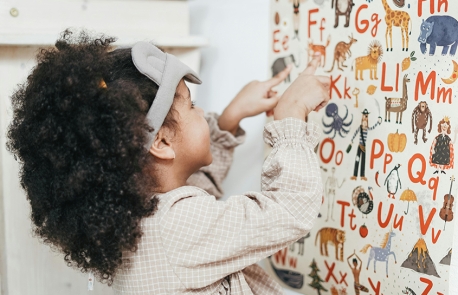
Early childhood education gives children their first opportunities to experience structured learning outside the home. Preschool is not only about preparing children for kindergarten—it can also help them develop curiosity, confidence, communication skills, creativity, and positive relationships.
At Creative Mind Preschool, children ages 2–6 participate in play-based learning combined with academic enrichment and age-appropriate experiences.
Why Is Early Childhood Education Important?
The preschool years provide opportunities for children to develop foundational skills that can support future learning.
Children can practice:
- Communication
- Early literacy
- Early mathematics
- Social interaction
- Problem-solving
- Creativity
- Independence
- Emotional awareness
A positive early learning experience can help children approach new situations with curiosity and confidence.
Learning Through Play
Traditional education often makes people think about books, worksheets, and classroom instruction.
For young children, however, learning can happen through movement, conversation, exploration, art, music, storytelling, and play.
Creative Mind Preschool describes its approach as play-based learning, using joyful exploration and guided experiences to help children develop foundational skills.
Early Academic Skills
Preschool can introduce children to basic academic concepts in developmentally appropriate ways.
Early Literacy
Children can explore letters, sounds, stories, books, and communication.
Early Math
Counting, sorting, shapes, patterns, and simple problem-solving can introduce foundational mathematical concepts.
Communication
Conversations, storytelling, songs, and group activities provide opportunities to practice language.
Creativity as Part of Education
Education isn't only about remembering information.
Creative activities allow children to:
- Express ideas
- Experiment
- Make choices
- Develop imagination
- Explore different possibilities
Art, storytelling, music, and imaginative play can make learning more engaging for young children.
Social Skills Are Part of Learning
Preschool also provides opportunities to learn how to work with others.
Children can practice:
- Sharing
- Taking turns
- Listening
- Cooperating
- Expressing feelings
- Resolving disagreements
These skills are important parts of becoming a confident and independent learner.
Bilingual Learning Opportunities
Creative Mind Preschool also offers bilingual learning experiences, with English-Spanish activities designed to support language development and cultural awareness.
What Parents Should Look for in Early Childhood Education
When evaluating a preschool, parents should consider:
| Area | What to Look For |
|---|---|
| Learning | Age-appropriate activities |
| Teachers | Caring and engaged educators |
| Environment | Safe and welcoming classrooms |
| Development | Social, emotional, cognitive and physical support |
| Activities | Play, creativity and hands-on experiences |
| Communication | Positive parent-teacher communication |
Frequently Asked Questions
What is early childhood education?
Early childhood education refers to educational experiences designed for young children before formal elementary education.
What do children learn in preschool?
Children can develop early literacy, mathematics, communication, social, emotional, creative, physical, and problem-solving skills.
Is preschool only about academics?
No. Quality preschool experiences can support the whole child, including social, emotional, cognitive, physical, and creative development.
Conclusion
Early childhood education provides children with opportunities to discover how they learn and interact with the world around them. A balanced preschool experience can combine academic foundations with creativity, play, social development, and exploration.
Creative Mind Preschool aims to make learning an adventure while helping children build the foundations they need for the next stage of their education.